© WHO / Blink - Saiyna Bashir
Lahore, Pakistan. The hospital is primarily a female health clinic, which also does counselling for women experiencing gender-based violence.
© Credits

Strengthening data on violence against women for action

Violence against women is a global public health, gender equality and human rights priority. Data are key to informed action – critical for understanding the magnitude of the problem, informing policies and programmes, advocating for change, and monitoring progress. WHO plays a leading role in strengthening collection, analysis, and use of violence against women data globally.

Since 2013, an increasing number of countries have made concrete investments to prevent and respond to violence against women. There is growing recognition of the importance of quality, comparable data capturing how woman and girls experience violence. The 5-year UN Women – WHO Joint Programme on Violence Against Women Data is working to strengthen collection, measurement, analysis, reporting and use of data across the world.

The ultimate goal of evidence and data is to inform responsive policies, programmes and tools. VAW data helps to inform WHO’s work around strengthening health sector responses, including in humanitarian settings.

1 in 3

women globally

have experienced physical and/or sexual violence, mostly at the hands of an intimate partner

Prevalence estimates

News

All →

Publications

All →
Prevalence of intimate partner violence and non-partner sexual violence against adolescent girls aged 15–19 years: technical brief

Adolescence is a critical stage of life, yet for many girls it is marked by violence that can harm their health, education and future prospects. Drawing...

Measuring non-partner sexual violence against women: data availability, methodological issues and recommendations for good practice

This briefing note focuses on the measurement of sexual violence against women and girls aged 15 years and older by persons other than an intimate partner....

Violence against women prevalence estimates, 2023: WHO African Region

This regional overview presents the 2023 prevalence estimates of violence against women in the WHO African Region, comparing regional findings with global...

Violence against women prevalence estimates, 2023: WHO European Region

This regional overview presents the 2023 prevalence estimates of violence against women in the WHO European Region, comparing regional findings with global...

Documents

All →
Page one of document

This document provides a curated list of events hosted by WHO and HRP at SVRI. 

Thumbnail

The Gender-Based Violence Quality Assurance Tool (GBV QA Tool) is a resource for health providers, facility managers, and program planners to assess,...

This is a living document that summarizes principles and recommendations to those planning to embark on data collection on the impact of COVID-19 on violence...

thumbnail

Preventing and responding to gender-based violence (GBV) in refugee contexts and emergencies remains one of the key challenges for the humanitarian sector. Research...

Multimedia

All →

Featured resource

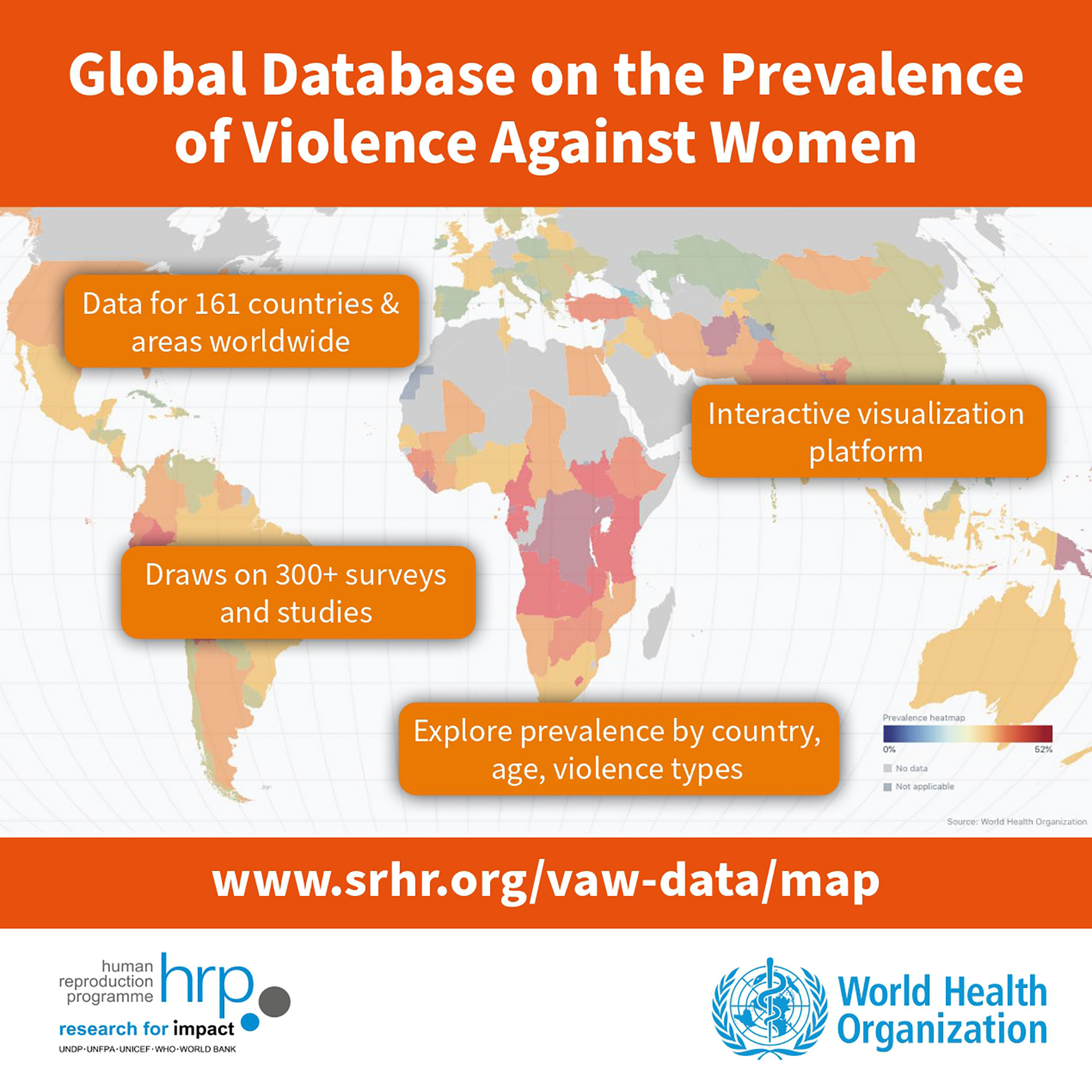
Comprehensive database on the prevalence of the most common forms of violence against women globally: Intimate partner violence and sexual violence by someone other than a partner

Related health topic

More