
World malaria report 2025
Antimalarial drug resistance challenging progress
Each year, WHO’s World malaria report provides a comprehensive and up-to-date assessment of trends in malaria control and elimination across the globe. The 2024 edition reviews investments in malaria programmes and research and assesses progress across all major intervention areas – prevention, diagnosis, treatment, elimination and surveillance – in 80 malaria-endemic countries.
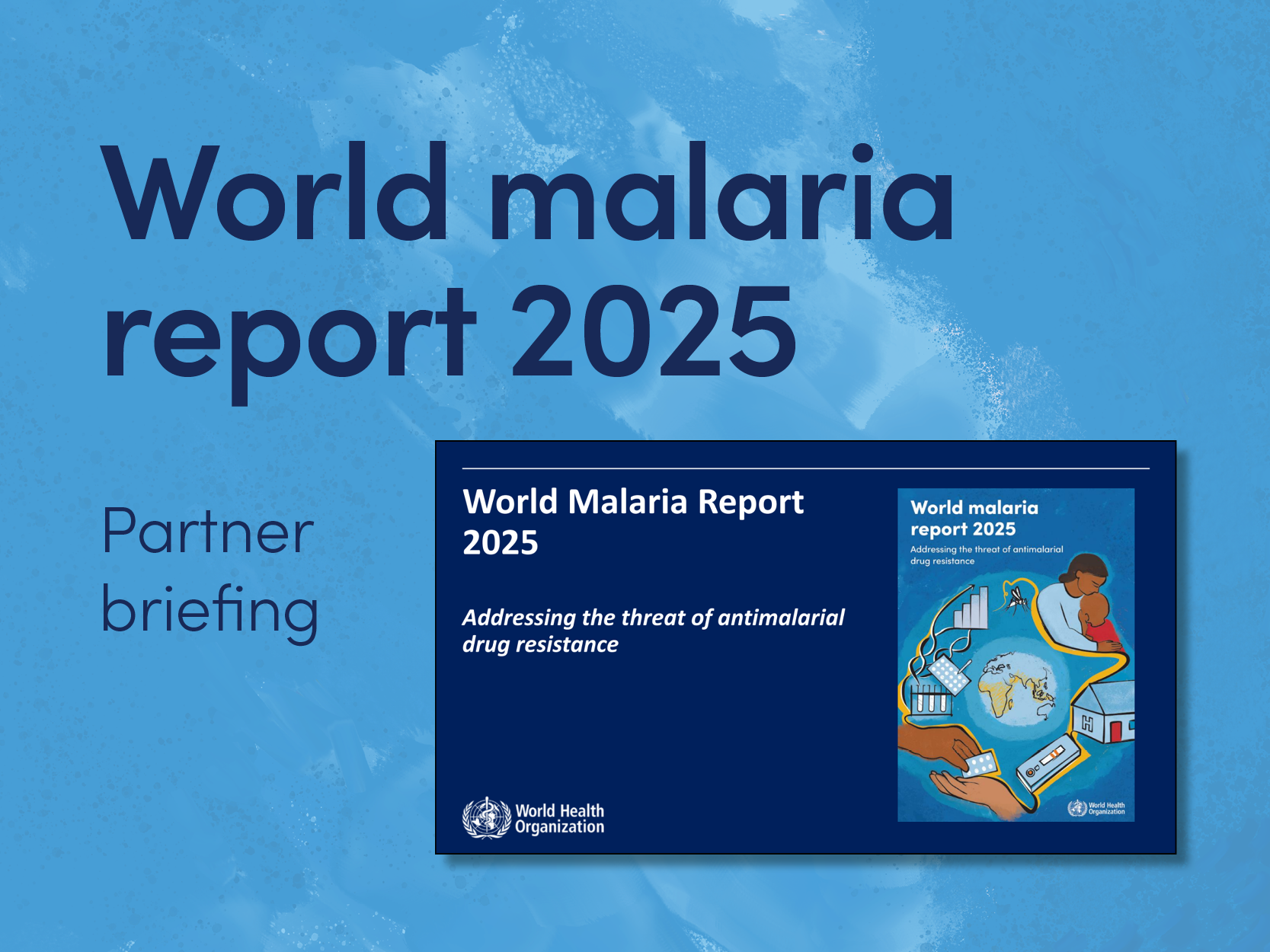
This year’s report spotlights the growing threat of antimalarial drug resistance. Partial resistance to artemisinin derivatives – the backbone of malaria treatments after failures of chloroquine and sulfadoxine-pyrimethamine – has now been confirmed or suspected in at least 8 countries in Africa, and there are potential signs of declining efficacy of some of the drugs that are combined with artemisinin.
World malaria report 2025
...
Global malaria toll could deepen
Since 2000, 2.3 billion malaria cases and 14 million deaths have been averted worldwide – including 1 million lives saved in 2024 alone – and there has been continued movement towards global elimination goals, with 47 countries and one territory now officially certified as malaria-free by WHO.
Despite these gains, however, malaria remains a serious global health challenge, with an estimated 282 million cases and 610 000 deaths in 2024 – roughly 9 million more cases than the previous year. The WHO African Region continues to bear the greatest burden, with 11 countries accounting for about two thirds of global cases and deaths. Progress in reducing the malaria mortality rate nevertheless remains far off track.


text